



How to Read the Grand Canyon’s Rock Layers as a Christian Visitor
How to Read the Grand Canyon’s Rock Layers as a Christian Visitor
One of the best things about Grand Canyon is that you do not have to begin with a diagram. The geology is standing in front of you.
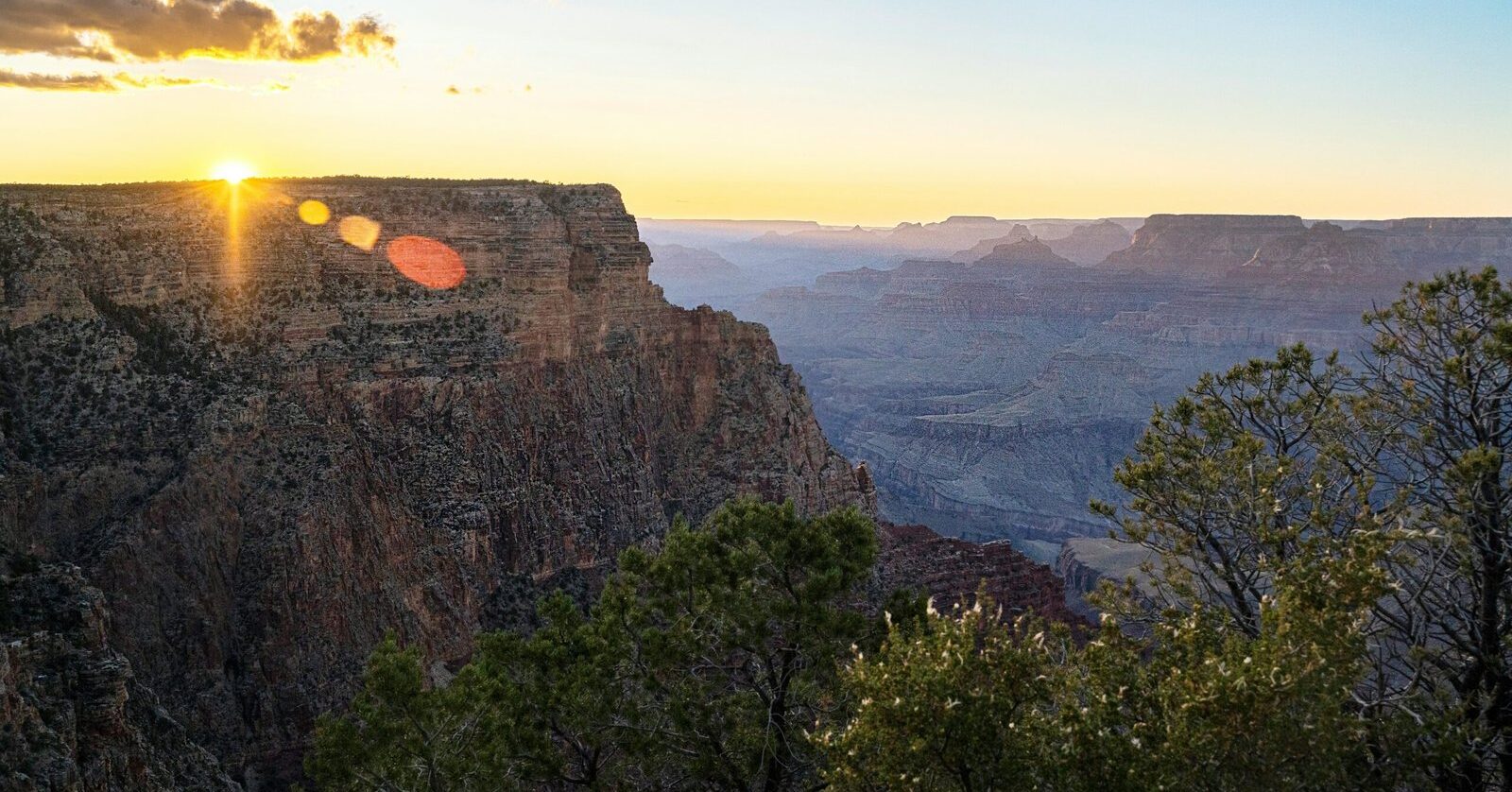
From a South Rim overlook, thousands of feet of rock are exposed across cliffs, slopes, side canyons, faults, erosional surfaces, and the inner gorge. Before asking how old the canyon is or which model of earth history best explains it, spend a little time learning what is actually there.
Starting with observation keeps Christian discussions of geology grounded in the physical evidence rather than treating it as an obstacle to interpretation.
The first pattern most visitors begin to notice is the alternation of cliffs and slopes. Resistant sandstone and limestone units commonly form the prominent ledges and walls. Softer shale-rich intervals tend to weather back into gentler slopes. Once you see that rhythm, the canyon stops looking like an undifferentiated stack of colored bands.

Learn the Layers Well Enough to Ask Better Questions
Geologists divide the sedimentary sequence into named formations and groups based on observable characteristics such as rock type, position, fossils, sedimentary structures, and regional relationships. Names such as the Kaibab Limestone, Coconino Sandstone, Hermit Formation, Supai Group, Redwall Limestone, Bright Angel Shale, and Tapeats Sandstone are useful because they give us a common vocabulary for talking about real packages of rock.
Using that vocabulary does not require accepting every interpretation attached to it. A Christian visitor can learn conventional stratigraphy quite comfortably while still asking different questions about chronology or depositional history.
Then start looking inside the layers. Cross-bedding, ripple marks, channels, mud cracks, graded beds, fossils, and other sedimentary structures preserve evidence of processes that acted while sediment was moving or soon afterward. They shift the question from “What color is that layer?” to “What happened here?”
Fossils deserve the same careful treatment. They are not distributed randomly through the canyon sequence. Different units preserve different organisms, trace fossils, plant material, or vertebrate tracks. Conventional geology explains that ordering within a long-age framework of changing environments and biological history. Young-earth creation models ask whether ecological distribution, burial sequence, catastrophic sedimentation, and Flood-related processes can account for much of the same pattern.
The observation comes first: particular fossils occur in particular strata. The historical explanation is the next question.

Some of the Most Important Geology Is Between the Layers
Contacts and unconformities can be more revealing than the formations on either side of them. At a major unconformity, rock has been deformed, eroded, or removed before younger sediment was deposited above it.
The Great Unconformity near the base of Grand Canyon’s Paleozoic section is the obvious example. In places, the Tapeats Sandstone rests across an erosional surface cut into tilted sedimentary rocks. Elsewhere it lies above crystalline basement. Whatever model of earth history we use has to explain the deformation and erosion beneath that surface and the later deposition above it.
Conventional geology places very long spans of missing time at portions of this boundary. Creation geologists have often focused on it when discussing the transition into major Flood sedimentation; ABSA’s Great Unconformity study develops that young-earth, global-Flood interpretation in more detail. The physical contact is the evidence both models are trying to explain.
It is also important to separate the history of the rock layers from the history of the canyon itself. The sedimentary rocks had to be present before the modern canyon could cut through them. A model for depositing the strata is therefore not automatically a model for excavating Grand Canyon.
The Colorado River clearly erodes and transports sediment today, but canyon development involves more than the river alone. Uplift, drainage changes, side-canyon erosion, landslides, groundwater, weathering, and regional geomorphology all contribute. Conventional models generally emphasize long-term river incision and drainage integration. Creation models often give a larger role to catastrophic post-Flood drainage and accelerated erosion.
Standing at the rim is a good place to keep those questions distinct. “How were these layers deposited?” and “How was this canyon cut?” are related questions, but they are not the same question.
Separate What You See From the Story You Build From It
The South Rim, and especially the Trail of Time, is useful because it lets you compare rock samples with the formations visible across the canyon while also encountering the conventional geologic interpretation directly.
We do not think Christians gain anything by avoiding that interpretation. If we want to evaluate a model, we should understand what it actually says and what evidence it is trying to account for.
A simple habit helps: distinguish observation, inference, and larger historical framework. A cross-bed is observable. The process proposed to form it is an inference from physical relationships and modern analogues. The way that interpretation is placed into a complete chronology of earth history is a broader framework.
Those categories are not a trick for making every interpretation equally valid. Evidence can support one explanation better than another. The distinction simply keeps us from calling an assumption an observation or dismissing a real observation because we dislike the model built around it.
Grand Canyon rewards that kind of patience. Why do some sedimentary units extend across enormous regions? Why are fossils ordered the way they are? How quickly can thick deposits accumulate under unusual conditions? What produced widespread erosional surfaces? How did uplift and drainage interact? Which present-day processes are good analogues for the past, and where might exceptional events require something more?
Those are not questions Christians need to avoid. They are reasons to keep looking.
Continue exploring: visit the Grand Canyon South Rim guide, browse the Creation Science resources, or explore Grand Canyon Christian Tours.

