


Old Faithful and Yellowstone: What Geysers Reveal About an Active Earth
Old Faithful and Yellowstone: What Geysers Reveal About an Active Earth
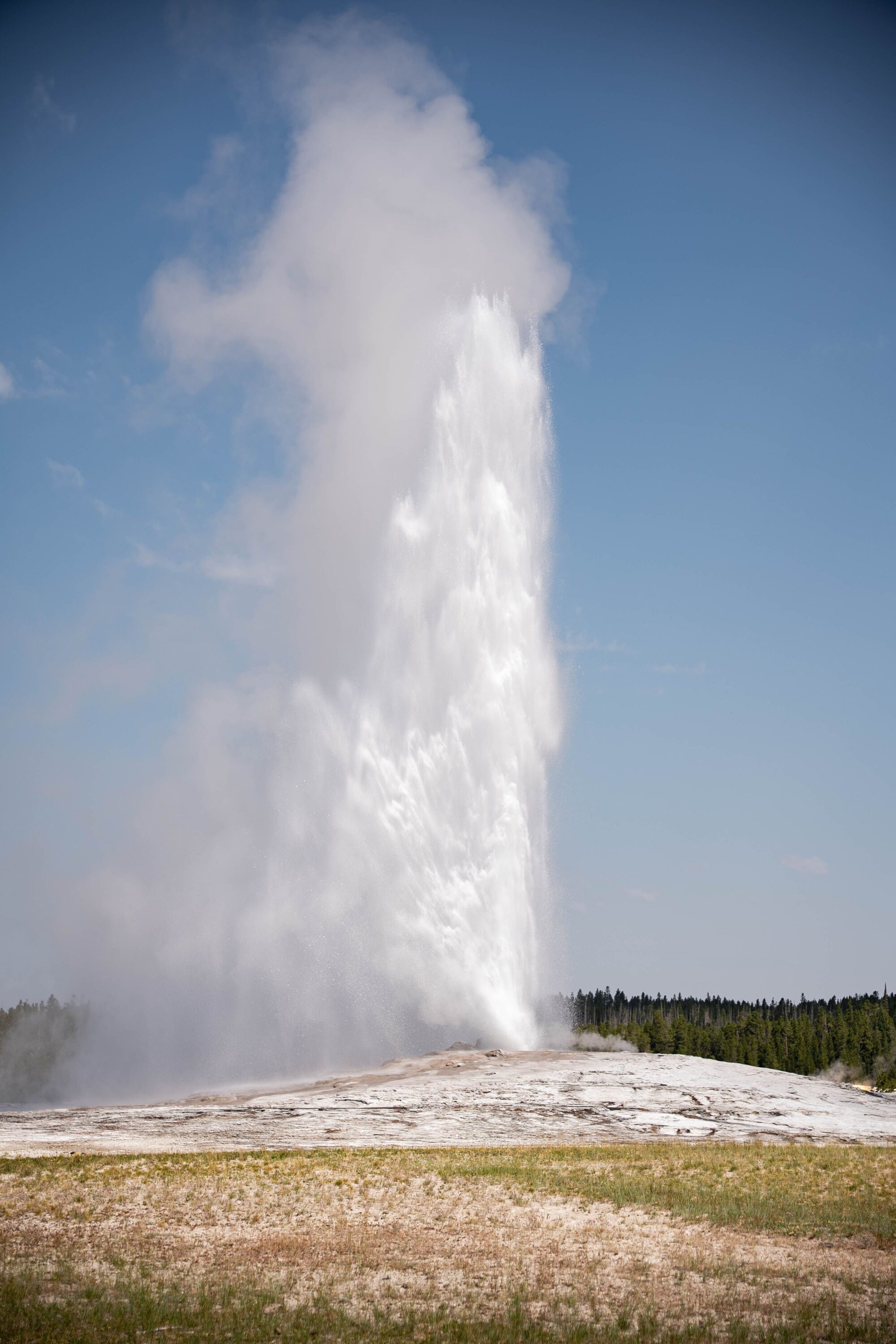
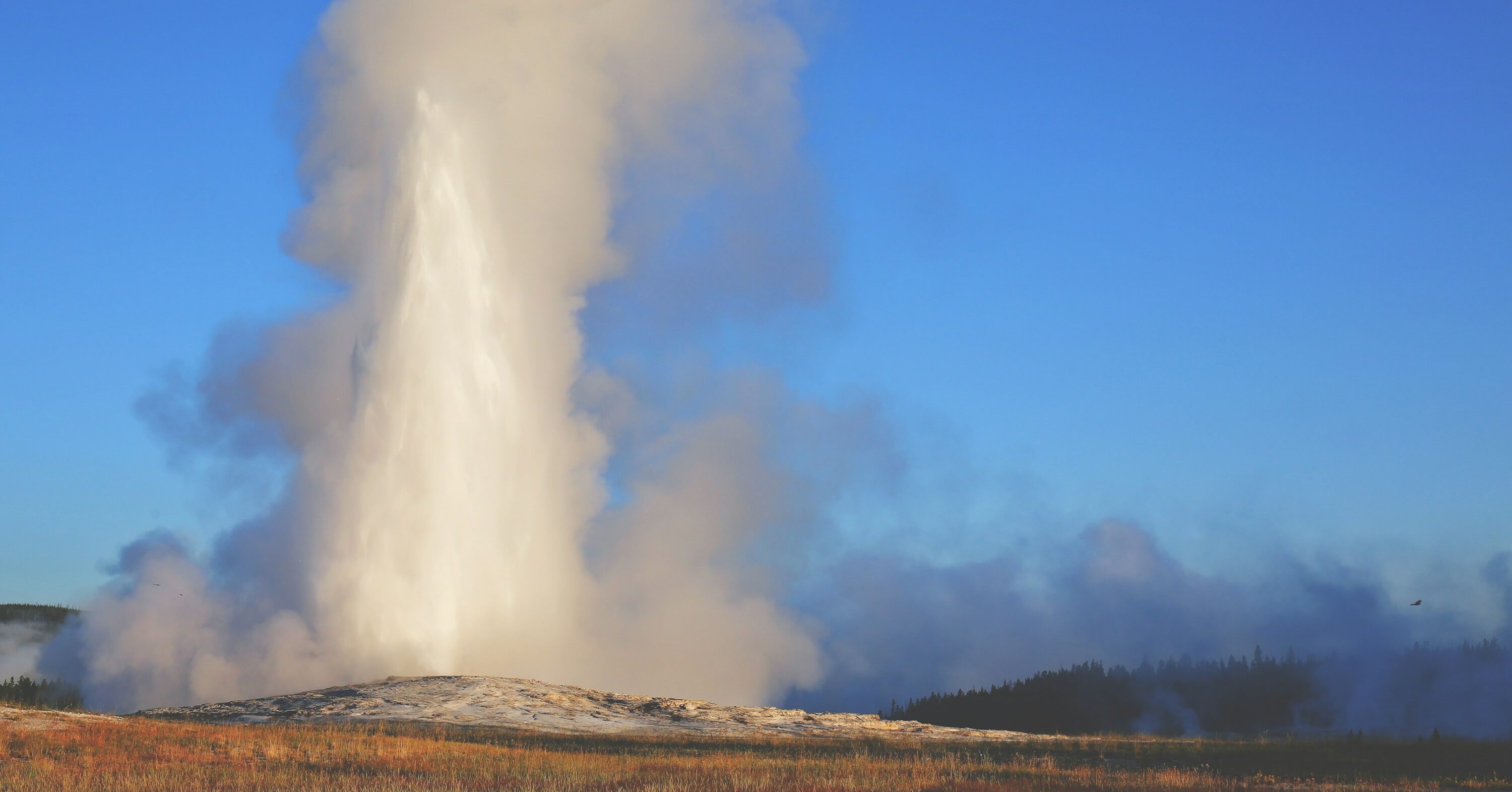
Old Faithful is easy to experience as a scheduled attraction. Check the prediction board, find a place to sit, watch the eruption, take the photograph, and head for the next stop.
But the eruption is really the visible end of a much larger system. Snow and rain soak into the ground. Water moves through fractures. Heat rises from Yellowstone’s volcanic system. Pressure changes the way water boils underground. Minerals move through solution. Fractures act like plumbing. Then, for a few minutes, all of that hidden activity announces itself at the surface.
For Christian travelers interested in creation and natural science, Yellowstone is a particularly good place to remember that the earth is not static. Geological processes are happening now, often on timescales short enough for us to watch.
The Geyser Is Only the Surface Expression
A geyser needs more than heat. It requires a water supply, a heat source, and an underground plumbing system capable of holding and pressurizing hot water.
Rain and snow provide much of the water. As that water moves downward through fractures, it reaches hotter rock at depth. Because pressure raises the boiling point, water can become extremely hot without immediately turning to steam. Eventually conditions shift, part of the water flashes to steam, the expanding vapor drives water upward, and the eruption begins.
Old Faithful is relatively predictable because that underground system repeatedly recharges in a fairly consistent way. The interval is not a perfect clock, but park interpreters can estimate the next eruption partly from the duration of the previous one.
That regularity is a useful lesson in systems. What we see at the surface may be controlled by geometry and processes we cannot see directly.
Yellowstone’s heat ultimately comes from a major volcanic system. The park is not a classic cone-shaped volcano, which is why visitors sometimes forget that its hydrothermal activity belongs to a much larger volcanic history involving caldera-forming eruptions, lava flows, earthquakes, deformation, and continuing heat beneath the crust.
Yellowstone Changes on Human Timescales
Geysers and hot springs are not permanent fixtures in exactly the form we see today. Earthquakes can alter fractures. Mineral deposits can narrow plumbing. Water supply can change. New vents can open, old ones can quiet down, and thermal features can shift behavior.
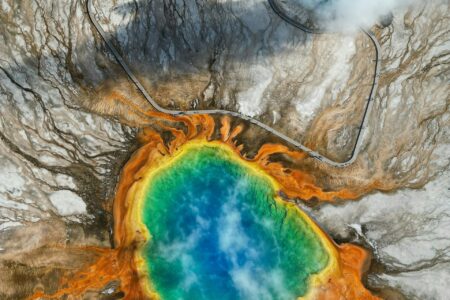
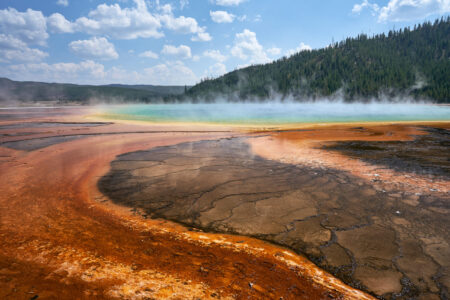
The mineral deposits around them are part of that ongoing activity. Hot water dissolves material underground and carries it toward the surface. As conditions change, minerals precipitate. Silica-rich sinter can build crusts, rims, terraces, and other structures around vents and pools.
Then biology joins the geology. Some of Yellowstone’s remarkable yellows, oranges, greens, browns, and reds come from microbial communities adapted to particular temperatures and chemical conditions. As water cools away from the hottest zones, different organisms can occupy different bands.
That is one of the things I like about a geyser basin. The landscape refuses to stay inside one subject. Geology, chemistry, hydrology, and biology are all operating together.
Present Processes Are Evidence, Not the Entire History
Watching Old Faithful helps us understand how a geyser can work. It does not by itself reconstruct everything that happened at Yellowstone in the past.
That distinction matters in historical geology. Present processes are essential evidence, but the past also has to be reconstructed from volcanic deposits, stratigraphy, erosion, mineral relationships, geophysics, landforms, and other physical clues.
Yellowstone itself preserves evidence of events far more energetic than the ordinary daily cycle of Old Faithful. Volcanic eruptions, hydrothermal explosions, earthquakes, landslides, and glacial activity have all affected the landscape. Earth history includes both persistent ordinary processes and episodes capable of changing things very quickly.
For a creation-focused visitor, that makes Yellowstone a useful place to practice the same discipline that matters elsewhere: observe first. What is measurable now? What process explains it? Which parts of a larger historical reconstruction come directly from the evidence, and which require additional assumptions about conditions in the past?
None of that means we should distrust geology. It means we should do geology carefully.
And the boardwalks are part of that lesson. Thin crust can hide near-boiling water, and ground that looks solid may not be. Staying on designated routes is not an annoying limitation placed on the landscape. It is a response to the fact that the landscape is actively changing beneath you.
Old Faithful is impressive because it erupts. Yellowstone is more impressive when you begin seeing the network beneath the eruption: water circulating, rock transferring heat, pressure changing, minerals moving, fractures directing fluids, and organisms occupying narrow chemical and temperature zones.
The show lasts a few minutes. The system never really stops.
Continue exploring: visit the Old Faithful guide or browse the Creation & Natural Science resources.

