



Guided Christian Tour or Self-Guided Travel? How to Choose
Guided Christian Tour or Self-Guided Travel? How to Choose
A guided tour and a self-guided trip can visit exactly the same place and still produce two very different experiences.
Neither one is automatically better. The real question is what you need help with.
Some travelers want complete flexibility. They enjoy researching transportation, museum collections, opening hours, site plans, and local geography before they arrive. Others would rather spend that energy on the place itself and have someone else handle the route, tickets, timing, and interpretation.
Christian travel adds another question: how much does it matter to you that the destination be interpreted through biblical history, church history, creation, apologetics, or Christian fellowship while you are actually there?
A Guide Is Most Valuable When the Place Is Hard to Read
Some destinations explain themselves reasonably well. Others do not.
A temple wall covered in hieroglyphs can be beautiful without context, but a knowledgeable Egyptologist can tell you which king is shown, which deity is receiving the offering, how the scene fits the temple, and what period you are actually looking at. A museum case full of seals, inscriptions, and pottery may look like a collection of small brown objects until someone connects them with chronology and excavation. A Grand Canyon overlook is impressive on its own, but the rock sequence becomes far more interesting when someone helps you recognize the formations and processes in front of you.
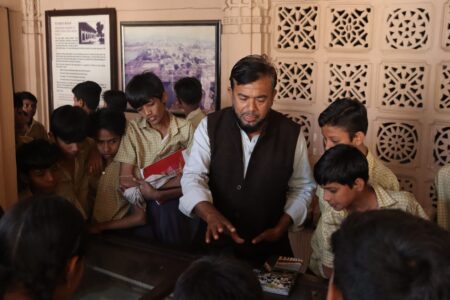
That is where guiding earns its value. A good guide compresses years of familiarity into the hours you have at the site.
For a Christian tour, that interpretation should feel integrated rather than pasted on. Biblical teaching, church history, archaeology, or creation questions should arise naturally from the place. A guide who simply adds a devotional thought after giving the same generic tour everyone else gives is providing something different from a genuinely Christian interpretive experience.

Independent Travel Buys Freedom, but You Pay for It With Preparation
Self-guided travel gives you control over pace. You can spend half a day in one gallery, skip an attraction that does not interest you, change plans because the weather improved, or return to the same archaeological site twice.
For photographers, researchers, experienced travelers, or people with very specific interests, that freedom can be worth far more than the convenience of a group.
But logistics have value too. Transportation, reservations, timed tickets, route planning, local coordination, parking, meal timing, and contingency plans all consume attention. In a city with good public transit and straightforward attractions, those things may be easy. In Egypt, Jordan, a remote national park, or an itinerary with many scattered sites, having them handled can change the entire feel of the trip.
Cost should be compared the same way. A self-guided trip may look cheaper until transfers, local guides, entrance tickets, separate excursions, booking fees, and transportation are added. A guided tour may cost more because those services are bundled. Neither sticker price tells the whole story.
Group dynamics matter as well. Traveling with other people means fixed departure times and compromise. You cannot remain indefinitely in a gallery while everyone else waits on the bus. But for many Christian travelers, shared worship, prayer, conversation, and learning are part of the reason to go. Community is not an inconvenience added to the itinerary. It can be part of the experience.
You Do Not Have to Choose One Model for the Whole Trip
A hybrid approach is often the best answer.
You might travel independently through London but book a specialist biblical-archaeology museum tour. You might explore a national park on your own and spend one day with a creation-focused guide. You might join an organized Egypt tour for the complicated transportation and site access, then add independent days before or afterward.
Use guiding where expertise, access, or logistics change the experience most. Keep independence where flexibility matters more.
And pay attention to what “Christian tour” actually means. The label can describe very different products. Some focus on biblical sites. Others emphasize church history, creation science, apologetics, ministry fellowship, or ordinary sightseeing hosted by a Christian leader. Ask what content is genuinely included, who is doing the teaching, and whether the guide is qualified for the subject being promised.
That distinction is one reason Global Christian Tours separates our own tours from recommended independent Christian tours.
When I am choosing between guided and self-guided travel, I usually come back to one question: what do I want to understand when I leave?
If the goal is simply to stand in the place, independent travel may be all you need. If the place is complicated and the real value lies in learning to see what would otherwise remain invisible, the right guide can completely change the day.
Continue exploring: browse Our Tours, see Recommended Tours, or use the Explore directory to discover destinations and Christian travel experiences.
