



How to Read a Historic Church Building as Christian History
How to Read a Historic Church Building as Christian History
A historic church can tell you much more than when it was built.
It records what people believed worship should look like, which parts of the building they considered sacred, whom they wanted to remember, what later generations removed, what they rebuilt after fire or war, and how the congregation changed while the walls stayed in place.
That is why we like to treat an old church as a historical source rather than simply an architectural attraction.
The first thing to abandon is the idea that the building represents one moment. Very few important churches do. A medieval nave may lead into a Tudor chapel. A Norman doorway can survive inside a church heavily restored in the nineteenth century. Windows may look medieval but date to the Victorian period. A tower may have been rebuilt after fire. Bomb damage may have removed an entire section.
Once you begin seeing layers, the building starts talking.

Read the Space Before You Read Every Plaque
Walk in and pay attention to how the church expects you to move. Where is the nave? Where are the choir or chancel and sanctuary? Are there transepts, side chapels, a crypt, screens, processional routes, or spaces that once separated clergy from ordinary worshipers?
Architecture reflects assumptions about worship. The placement of an altar, communion table, pulpit, font, choir stalls, or screen can reveal theological and liturgical priorities. Some of those elements may have moved several times as the church changed.
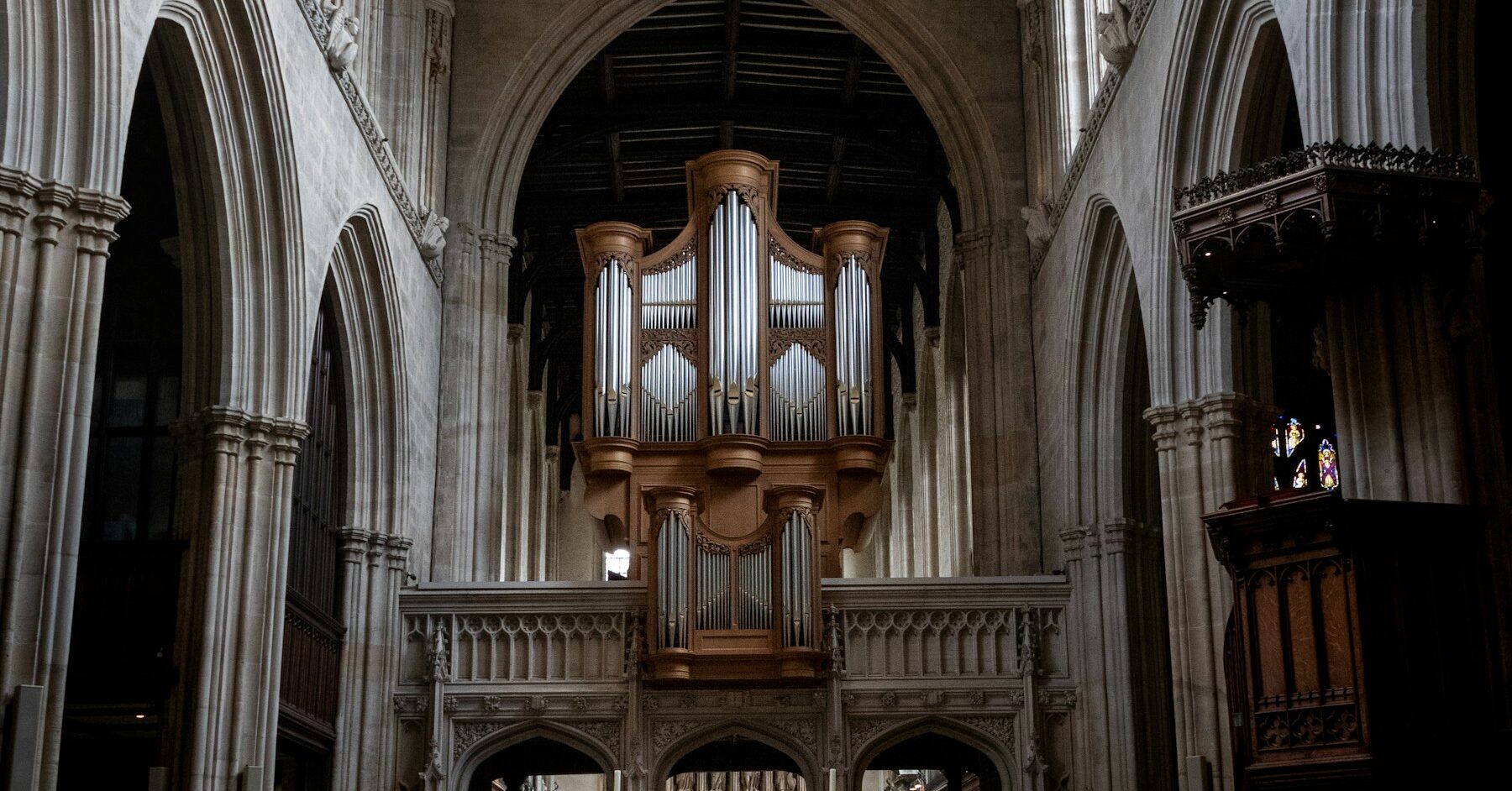
In England, the Reformation is often visible precisely because the building had to be adapted rather than replaced. Medieval images disappeared. Wall paintings were covered. Monastic communities were dissolved. Screens or altars were altered. Later generations introduced new monuments, furnishings, organs, stained glass, and restoration schemes.
This means one church can preserve evidence of medieval Catholic worship, Reformation disruption, later Protestant use, Victorian revival, war memorialization, and present-day worship without any one layer completely erasing the others.
Look up as well. Roofs, vaults, bosses, timber structures, painted ceilings, heraldry, and later repairs often preserve information the eye misses when it stays at floor level. Then look down and sideways. Floor slabs, fonts, doorways, reused stone, crypts, and changes in masonry can be among the oldest surviving features.

Memorials Tell You What a Community Wanted to Remember
Tombs, wall monuments, floor inscriptions, military memorials, plaques, and stained glass are not neutral lists of the dead. They are choices about memory.
Read the dates. Notice titles, professions, family relationships, military units, clergy offices, epidemics, biblical quotations, and the language used to describe character or achievement. A local church can unexpectedly connect you with national politics, war, exploration, commerce, education, or social change through the people memorialized inside it.
Then ask who is missing.
Stone tends to preserve the people who had money, status, institutional importance, or descendants able to commission a monument. Most ordinary worshipers left fewer visible traces. Parish registers, burials, archaeology, and local archives can sometimes recover the people the walls do not mention.
Stained glass deserves similar caution. A window may depict a medieval saint or biblical scene and still have been installed in 1890. Always check the date before treating the image as evidence for the period of the architecture around it.
Keep the Church Connected to the Place Around It
Do not finish the visit at the front door. Walk through the churchyard. Gravestones can reveal family patterns, occupations, mortality, migration, war, disease, and changing religious language over several centuries.
Then look at where the church sits. Is it beside a market, castle, river crossing, university, monastery, royal palace, village green, or old road? Christian communities lived inside geography. The placement of a church can tell you why a settlement mattered and how worship fit into everyday life.
Historic churches also accumulate stories. A king supposedly hid here. A famous preacher used this pulpit. An apostle visited the site. A particular chair belonged to someone important. Some traditions are well documented. Others first appear centuries after the event they describe.
You do not have to be cynical about local tradition, but you should ask when the story first appears and what evidence supports it. Respecting a church does not require believing everything a tour guide has ever repeated about it.
And if the church is still active, remember what kind of building you are in. A service can sometimes explain the architecture better than another hour of sightseeing because you see how people move, hear the acoustics, watch the use of the sanctuary, and understand why certain spaces exist.
The best historic churches are interesting precisely because they are not pure. They preserve continuity and disruption together. Medieval foundations, Reformation change, later revival, national memory, restoration, and present worship can all occupy the same structure.
Once you learn to read those layers, a church stops being a beautiful old room and becomes a long human story built in stone.
For a concrete example, see our field guide to Westminster Abbey.
Continue exploring: visit our Christian Heritage & Church History resources, browse London Christian Tours, or use the Explore directory to discover historic destinations.

