



Westminster Abbey: What Christian Travelers Should Notice
Westminster Abbey: What Christian Travelers Should Notice
Westminster Abbey can overwhelm you with famous names before you have really looked at the building. Kings and queens, coronations, royal weddings, poets, scientists, politicians, military figures, and national memorials all compete for attention. It is easy to spend an hour moving from one celebrated person to another and leave without understanding why all of them are gathered in this particular church.
The better question is what kind of place Westminster became over the centuries. The answer takes you into medieval devotion, monarchy, pilgrimage, Reformation upheaval, national ceremony, worship, literature, science, and the way Britain chose to remember itself.
The Abbey is not one historical moment preserved in stone. A major church stood here in the age of Edward the Confessor and was consecrated in 1065. Henry III began rebuilding the present Gothic church in 1245, centering it closely on Edward’s shrine. Later chapels, tombs, monuments, furnishings, restorations, and memorials accumulated around that medieval core.
Once you see the Abbey that way, the visual complexity starts to make sense. Different periods are not cluttering the building. They are the building.

Start With Edward the Confessor and the Coronation Story
Edward the Confessor still helps explain why Westminster became so closely tied to English monarchy. Henry III’s rebuilding was deeply connected with Edward’s shrine and royal cult. In the medieval world, kingship, sanctity, pilgrimage, patronage, burial, and national identity were not neatly separated categories.
The coronation tradition grew inside that same sacred setting. English and later British monarchs have been crowned at Westminster since William the Conqueror in 1066. Modern coverage naturally emphasizes pageantry, robes, crowns, procession, and political symbolism. But the ceremony itself is framed as Christian worship. It includes prayer, Scripture, vows, anointing, and the idea that political power carries moral obligations before God.
That changes the way the Coronation Chair should be understood. It is not simply an old chair associated with famous rulers. Its importance comes from what has happened around it within a liturgical act repeated across centuries.
Royal tombs deepen the same theme. Their presence does not tell us that every monarch buried here was especially devout. It tells us that burial near sacred space mattered, that dynasties used churches to shape memory, and that Westminster became a place where the monarchy repeatedly located itself within a Christian framework.

The Reformation Changed the Abbey More Than Its Decorations
The English Reformation did not simply replace one set of theological ideas with another while the building continued as before. Westminster’s institution changed repeatedly.
The medieval Benedictine monastery was dissolved under Henry VIII. The church briefly became a cathedral. Benedictine life returned under Mary I. Under Elizabeth I, Westminster was re-established as a collegiate church rather than restored permanently as a monastery.
Those changes affected property, worship, clergy, community life, liturgy, institutional authority, and the use of the building itself. They are a good reminder that church history leaves physical and administrative evidence as well as theological texts.
The Abbey’s status today as a Royal Peculiar continues its unusual relationship with the crown. It does not sit inside the normal diocesan structure in quite the same way as an ordinary parish church. That institutional oddity makes much more sense when you remember how long Westminster has occupied the space between church, monarchy, government, and national ceremony.
Look outside as well as inside. Parliament is next door. Whitehall and royal sites are close. The Thames is nearby. The Abbey’s Christian history is inseparable from the political geography around it.
Memorials Show How a Church Became National Memory
The density of memorials is one of Westminster’s most striking features, but trying to read every name is a terrible way to visit. Look for patterns instead.
Who is actually buried here and who is only commemorated? Which professions and periods dominate? What biblical language appears repeatedly? Why did a church become an appropriate place to remember poets, scientists, military leaders, politicians, musicians, reformers, and public figures?
Poets’ Corner is especially revealing. English literature and Christian thought have intersected for centuries, though the writers memorialized there held widely different beliefs. The point is not that everyone in Poets’ Corner belongs in a neat Christian category. The more interesting question is why a Christian institution became one of Britain’s great spaces for cultural memory.
The same is true of scientists such as Isaac Newton and Charles Darwin. Their burial in Westminster does not settle modern arguments about science, Scripture, or origins, and it should not be turned into a slogan about perfect harmony between science and Christianity. It does show that the historical relationship between scientific achievement, Christian institutions, and British public life was more complicated than many modern conflict stories allow.
That is one reason the Abbey is so useful. The church has accumulated people who do not all fit the same theological, political, or intellectual narrative. Instead of forcing them into one, let their presence expose how broad the Abbey’s national role became.
At the same time, do not let the memorials turn the building into a museum. Westminster remains a working church. Prayer, Scripture, music, communion, and daily worship continue amid the graves and monuments. For a Christian visitor, that distinction matters. The Abbey is not merely evidence that Christianity was once important in Britain.
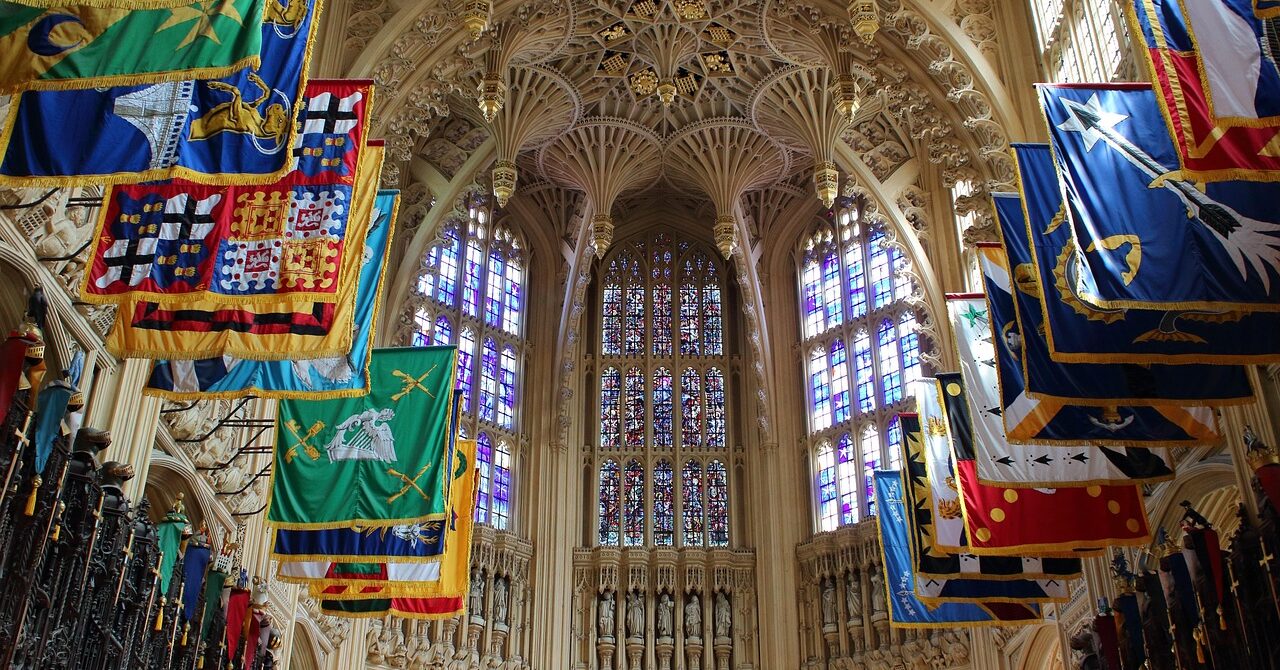
Architecture helps recover that sense of living space. Look up at the vaulting, but also watch how the columns, chapels, screens, floor levels, tombs, and sightlines organize movement. Ask what spaces were used for pilgrimage, worship, procession, burial, and royal ceremony. The famous names become easier to understand once you know the building they inhabit.
And then keep going. Westminster is enormously important, but it is not the whole story of Christianity in London. St Paul’s Cathedral gives you fire, rebuilding, preaching, Wren, and the City of London. The Tower of London brings conscience, imprisonment, Tudor conflict, execution, and burial into view. Parish churches, Nonconformist sites, mission history, cemeteries, museums, and neighborhoods add still more layers.
Westminster works best as a doorway into that larger landscape. Leave knowing a few names if you like, but more importantly, leave understanding why this particular church became a meeting point between Christianity, monarchy, culture, and national memory.
Continue exploring: open the Westminster Abbey destination guide, compare it with our St Paul’s Cathedral and Tower of London field guides, or explore London Christian Tours.

