



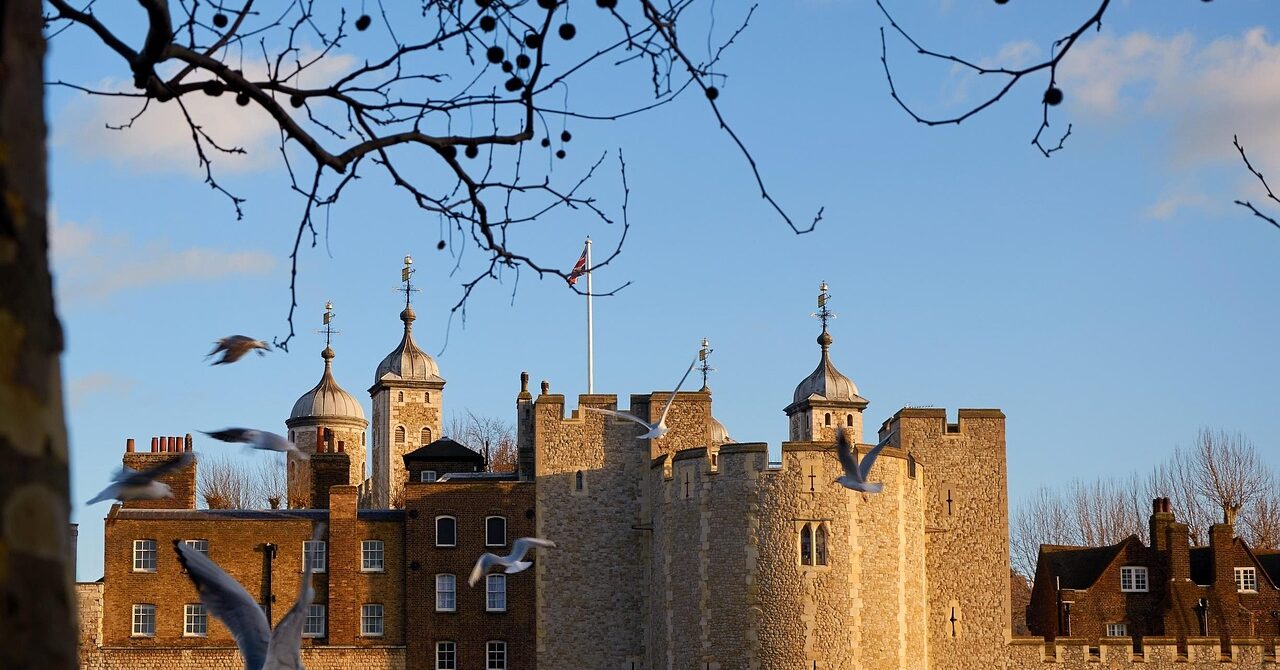
Tower of London: What Christian Travelers Should Notice
Tower of London: What Christian Travelers Should Notice
The Tower of London is famous for prisoners, executions, royal intrigue, ravens, and the Crown Jewels. That reputation is deserved, but it can also hide one of the most important things about the site: some of the Tower’s most consequential stories are Christian history.
The fortress contains a working chapel, burial places associated with major figures of the English Reformation, evidence of medieval and Tudor worship, and the setting for conflicts over conscience, doctrine, royal supremacy, succession, and church authority. None of those stories are tidy. That is part of what makes the Tower worth reading carefully.
Start by remembering that this was never simply a prison. The Tower was a royal fortress and residence, an administrative center, an armory, a ceremonial space, and a place of worship. The religious conflicts that unfolded here did so inside a functioning center of royal power. Monarchy, government, military authority, worship, and personal conscience occupied the same physical landscape.

The Chapel Turns Tudor History Into Something Personal
The most important Christian-history stop inside the Tower is the Chapel Royal of St Peter ad Vincula. The present building dates to 1519–1520, in the reign of Henry VIII, though worship on or near the site reaches back much further. It remains a working church today.
That continuity matters. St Peter ad Vincula is not merely a memorial room attached to famous executions. It has served the Tower community for centuries, and Christian worship still takes place within walls that also hold some of the most uncomfortable memories of Tudor England.
The burials make the Reformation impossible to treat as an abstract theological dispute. Anne Boleyn, Catherine Howard, and Lady Jane Grey are associated with burial here. So are John Fisher and Thomas More, both executed in 1535 after refusing to accept Henry VIII’s religious supremacy.
Those people do not belong in one simple category. More and Fisher raise questions about conscience, obedience to civil authority, church authority, and the cost of refusing the king. Anne Boleyn stands at the center of the dynastic and political crisis that helped drive England away from papal authority, yet the consequences quickly became much larger than she was. Jane Grey’s brief reign tied Protestant identity to the struggle over succession after Henry VIII. Catherine Howard belongs to the same Tudor court world, but her execution should not be forced into a Reformation martyrdom story.
That distinction is important. A historically responsible Christian visit does not turn every death in a church into a theological symbol.

Read the Building, Not Just the Names
St Peter ad Vincula also preserves physical clues to the religious world that existed before the Reformation changes were complete. Features associated with Catholic worship, including the piscina and hagioscope, remind us that theological change altered not only institutions and doctrines but also liturgy, furnishings, architecture, and the way sacred space was used.
The Tower is full of moments like that. The White Tower takes you back into the Norman and medieval story long before Henry VIII. Tower Hill, outside the modern visitor boundary, reminds you that not every famous prisoner was executed within the fortress. Thomas More and John Fisher died there in public executions, while other deaths took place more privately inside the Tower precincts.
Geography helps. So does scale. Modern visitors move through the site with maps, exhibits, cafés, and a clear exit. Prisoners experienced the same walls through uncertainty, confinement, interrogation, prayer, fear, hope, and preparation for death. We should not invent their inner lives, but the setting helps make documented choices and convictions more human.
Burial in the chapel adds another layer. Many of the people remembered there did not choose the Tower as their final resting place. Their reputations were then reshaped by later generations through political memory, denominational memory, sainthood, rehabilitation, and national storytelling. The building preserves the bodies, but history keeps revising the meaning attached to them.
Use the Tower to Complicate the Reformation Story
The Tower works especially well when you compare it with Westminster Abbey and St Paul’s Cathedral.
Westminster tells a story of coronation, medieval continuity, royal burial, shrines, and national memory. St Paul’s brings the City of London, preaching, the Great Fire, Christopher Wren, and the public role of a post-Reformation cathedral into view. The Tower adds royal authority, imprisonment, conscience, execution, and the dangerous overlap between religious belief and political power.
Together, those sites make English church history much harder to flatten into a simple Protestant-versus-Catholic timeline. Real people found themselves on different sides of theological, political, and dynastic conflicts that could not be neatly separated from one another.
That is the best way to approach the Tower. Do not try to memorize every prisoner. Pay attention to a few strong threads: royal power, Christian worship, conscience, burial, the Reformation, and the changing relationship between crown and church. Make St Peter ad Vincula a deliberate stop. Look at the architecture before reading every plaque. Then let the people buried there complicate whatever simple story you arrived with.
Continue exploring: open the Tower of London destination guide, compare it with our Westminster Abbey and St Paul’s Cathedral field guides, or explore London Christian Tours.

